Not all who wander are lost. -J.R.R. Tolkein

Friday, November 6, 2009

Esten's page

I’ve been sharing my thoughts and experiences as we roam around, but what about Esten. What’s she been up to? How is she?

Well she’s doing fine. Along with enjoying and savoring wandering this wrinkled and warped half of the continent she is fully involved with her main purpose and mission of .…. keeping me alive. Yes, if you ask Esten, keeping me from bodily harm is a worthwhile and full time job, and according to her, I am in mortal danger several times a day. Thanks to her I’ve yet to be frozen, starved, drowned, lost, charred, poisoned, gored, mauled, or electrocuted. But along with all this she’s been having her own share of fun.

In sheep canyon we were on a bike ride when we came across some free ranging horses. Esten made friends and was soon sharing the carrots from our lunch.

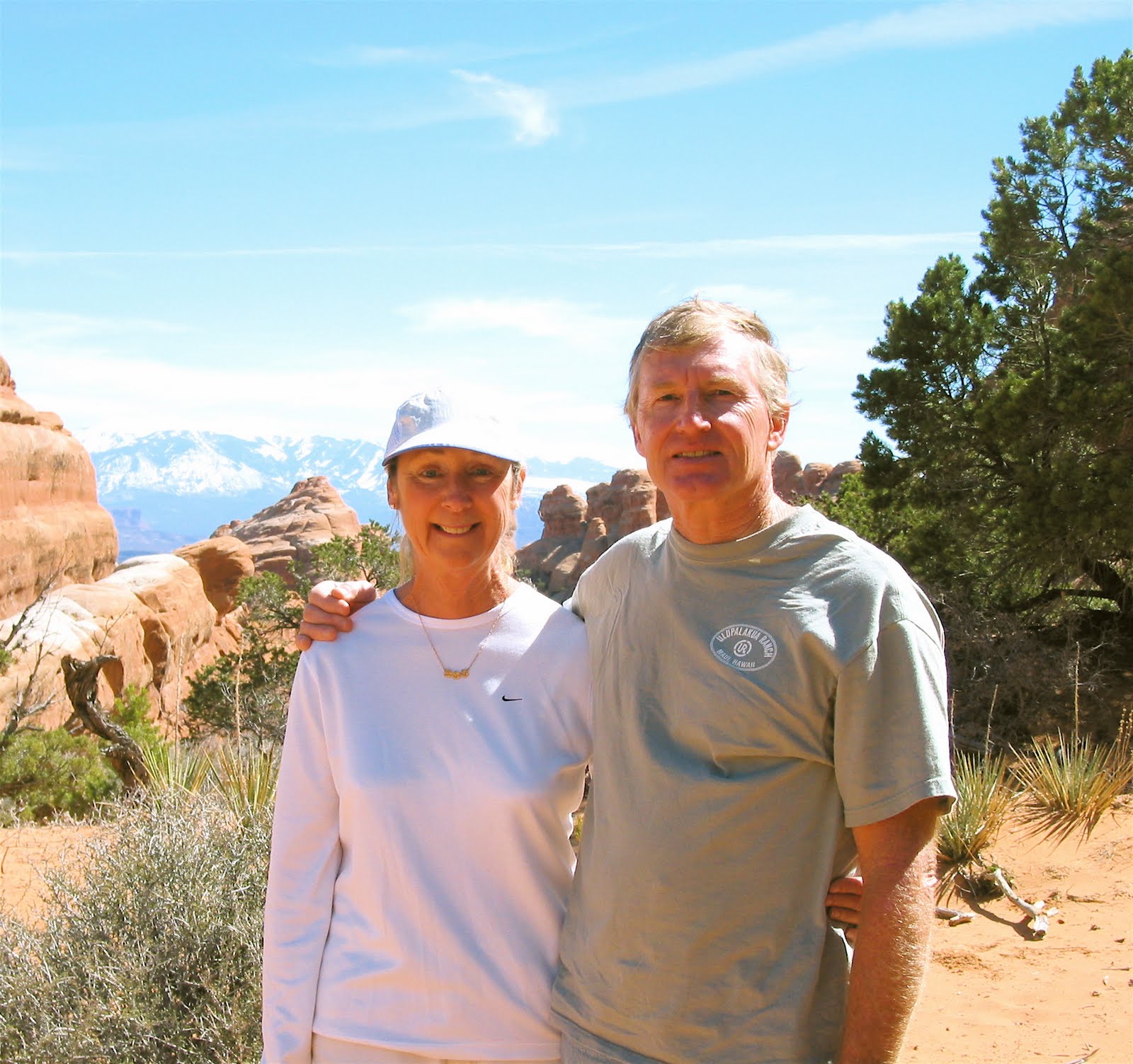
Esten followed my example and turned 62 on this trip. Ok Mama, it’s your birthday wahdayawanna do? Ouu, Ouu... ARCHES.

 Ok picnic and a beer in the middle of nowhere

 (a beautiful little piece of nowhere) along with presents (a new fleece shirt, some candles, a flashlight her own bear spray, and a magnet with a picture of canyonlands for the trailer) The funny thing was that we put our chairs facing this beautiful view of nothing in particular and cars stopping and trying to see what we were looking at. 

Kind of like stending on a street corner looking up. Pretty soon everybody’s looking up


After lunch we hiked out to admire landscape arch (if you haven’t done this do it soon. A few years ago a big chunk of the arch fell off and who knows when the whole thing could go.( I hope it’s not soon, along with delicate arch it is our favorite )

Then one day she turns around and sees bighorn sheep walking though the camp. Grazing and paying no attention to us.

Another day at the Grand Canyon I was busy cooking and she looks over and says “ ha……….ha” I looked up thinking she was trying to say hawk. Then she gets it out, “javalina” and sure enough one walks by about 20 feet from us. We've looked all over for one of these critters, and one just walks through camp.


 She enjoys joining me for long walks or bike rides, this one at Joshua Tree NP after exploring an old mine site.

Is she having fun? You’ll have to ask her. But I know we both can’t wait to come back and do this again.


Sunday, October 18, 2009

Canyons

We move up to Island in the Sky ( a very descriptive name) in Canyonlands. Here we are on a high mesa (6000 feet) and 2000 feet above the Colorado and Green Rivers,

 and although we cannot see the confluance, they do meet down there and flow on into cataract canyon, full of raging white water. The views up here are stupendous, sweeping panoramas of a good section of northeastern Utah, the La Sal and Abajo Mountains to the south, across the Green to the wild and remote maze district of Canyonlands. We are also drawn by the remoteness of this pinon/ juniper and sage mesa and the tiny campground of Willow Flats the only one up here. Twelve campsites in the middle of nowhere. Moab is the nearest city, 50 miles away. Complete silence and brilliant night skys. The milky way arcs overhead at night.

 On our third night the weather radio warns of an approaching cold front with winds and maybe thunderstorms. We’ve been through this before and put most everything in the car, folding down the camp stove, folding up the chairs. We sleep through until about 4 AM when wind, rain, lightening, thunder and then hail make sleep impossible. Time to make a cup of coffee and enjoy the show. 

At daybreak Esten looks out and asks “Did you put the stove in the car?”. It’s nowhere to be seen. We find it later about 10 feet from the table where it was left. A folded up camp stove with a propane cylinder attached presents a pretty low wind profile. I don’t know what wind speed is needed to blow one through the air. I’m glad we were inside. It would have been unpleasant in a tent. 

Speaking of tents, the afternoon the wind started a tent rolled through our camp and lodged against a juniper. I carried it back up wind but could not find the owner. I tied it to a post near the only empty campsite. By dark the owners had yet to recover it. In the morning we saw them packing up, a couple of girls from Germany. I tell them how their tent tried to get away. They thank me for the rescue, They look a little sleep deprived and dusty.

The windy day that follows makes a good travel day and we move about 20 miles south to the Needles area of Canyonlands. This involves about 150 miles of driving. There is this river and deep canyon in the way.

 A few days later I take a trail to get a close view of the needles area.

 There is no road going closer than about five miles of them. The area is a maze off dry washes

 and mesas off sandstone. The trail soon climbs onto one of the sandstone ledges and weaves for miles from one ledge to the next with only stacks of rocks pointing the way.

  ( there is a stack of rocks in this picture of the "trail")

Usually trails are worn paths with footprints to remind one of others passing. Here on the rock ledge there are no footprints and except for the stacks of rocks, no reminder of other humans at all.

 This lends sense of isolation, probably pronounced because I’m alone. Esten has taken a flatter trail. She doesn’t like climbing up onto the rock ledges. There is no sound except for my footsteps, no other hikers, no wind, no movement of any kind, just these little stacks of rocks to follow. I discover an advantage of this ledge walking. Usually it is wise to stay on the trail. It’s the easiest way to travel, and more importantly, walking off the trail breaks down vegetation and makes unwanted new tracks. Here though, no footprints are left and the hiker is left to explore at will. As long as one of the cairns is in view the “trail” is in sight. I wander around looking at the rocks millions of years younger that have fallen from higher ledges, and then walk up on the higher ledges, looking for any sign of fossils. I find none but spend the afternoon walking in silence. Very enjoyable.

The Canyon

There is no one who is not stunned by the beauty of the Grand Canyon. It is jaw dropping from any angle, and that’s on a sunny day. When the weather “get’s interesting” the scenery turns from spectacular to magic. We wake (again) to hail and thunder. Last nights weather called for a 20 per cent chance of thunder storms , Now they mention there’s a cold front moving across Utah. The plans for a bike ride to Hermits rest are put on hold and we walk along the south rim with raincoats, not getting too far from shelter. But what a treat. The scenery changes every hour.


Some of us are drawn back to this place time after time and always will be.

Sunday, October 4, 2009

Sheep Creek and beyond


OK, we’ve been to a string of National Parks. These are beautiful places and we love them dearly but it’s time to get lost. Maybe find somewhere barely on the map. In fact Sheep Creek does not appear on any map we have. We found it four years ago and return to find it more beautiful and fascinating than we even remembered.

The drive down here from thee Tetons takes most of a day. Leaving Teton (not easy to do) the road follows the Hoback river valley through some gorgeous country, dramatic mountains and cliffs, pine and fir forest with swaths of aspen and cottonwood turning golden, red and orange. Then cresting out of the river valley the scenery changes to sage flats, and sage flats it is for 150 miles. This is the Big Sandy basin, 5,000 feet high, almost completely flat. Proghorn country and a delightful place to cross in a covered wagon if your on your way out west. We pass a section of the Oregon trail and the headlands of the Green River which up here is only a winding gully filled with willows and cottonwood. We continue south past Green River Wyoming , more sage flats for another fifty miles although the terrain starts to gently rise and fall. We are paralleling the Flaming Gorge Resevoir, manmade, a  flooded section of the Green River. (damn dams). The road drops into a green valley and through the little town of Manila and climbs a short  grade. Nothing prepares you for what happens next. 

You climb and drop into a series of dramatic canyons of various and quite different sandstones. Welcome to Utah.


OK a little geology will help. You probably already know the story, but bare with me Much of Utah (and Arizona) is sandstone country. The Colorado Plateau. There was this mountain range just west of where the Rockies stand today. It is thought to have been taller then today’s rockies. It’s almost gone now, washed out over Utah into a vast shallow sea.The sea level rose and fell. At various times the area was mudflats, river delta, tide flats, sand dunes, protected bays, swamps each layer leaving a distinct footprint. All the time drifting the Pacific plate was drifting north from near the equator to where it is today (it’s still moving). Time, pressure and calcium bound the layers into rock and then the whole layer cake was pushed up, way up. We started near sea level remember. I’m typing this at over six thousand feet (Island in the Sky , Canyonlands) The layers have been folded,bent, twisted, you name it. Then worn by water into canyons, cliffs, buttes, mesas, domes, arches, coves, shelves and layered vertical faces that defy imagination. Utah. We’ll wander around here for the next six weeks. Delighting ourselves with the endless variety of ways water can make beauty out of layered sandstone.

Back to Sheep Canyon. The layercake here has been tilted and worn away so that as the road travels south 

we are dipping back through millions of years of history. Navajo Sandstone, Kayenta, Wingate, each with colors that speak it’s varied origin. Our destination is along a

 stream in one of these canyons, bordered with willow, cottonwood and pine with juniper on the drier hillsides. We found this cam

p on a windy day when stopping in the more exposed flat sage plain to the north seemed uninviting. We had just set up camp and looked in the stream … “WHAT’S THAT?”


 Red fish are swimming upstream with black heads and hooks on there chins. We're fascinated.  We later learn these are  Kokonee salmon, planted in the resevoir for fishing. They’re migrating upstream to spawn. Fold out a chair and be entertained. The element of surprise in discovery is the reward for exploration.

We generally look for a trail to walk or side road to ride when we find a new place. There is a road going up the valley and set off the next day. Once again , surprise. After a few miles the valley narrows into  a narrow canyon. Thousands of feet of sandstone on each side we wind up what turns into a gorge and just before the road climbs steeply out of the gorge (a good place to turn around) there is a picnic area (out of the stream bed) and a memorial to a family of seven who were killed in a flash flood forty five years ago when a campground was here. A couple in their thirties with three children 1, 2 and 4, and two teenage nephews lost their lives. We know it may not even have been raining here that night. I later look at the map to see that this valley drains part of a huge area of wilderness to the west. The thunderstorm could have been thirty miles away. There are plastic flowers and some stuffed animals by the memorial. Forty five years have passed yet there is still a sadness here. We are reminded of how precious and fragile life is.

South now towards Moab and Canyon Country, and some surprising changes. First Cisco a quaint rickety relic of a settlement with barely 20 inhabitants. Well that was the last time we saw it (the take out point for a raft trip called Whitewater through that old worn down mountain range, the “old Rockies) Cisco is so pleasantly ramshackle it was used for a scene in “Thelma and Louise” As we approach across miles of nothing we see new gas exploration “compounds” (thanks Mr. Bush) and find Cisco’s dusty dirt streets are cluttered with trailers and campers. We suppose it’s the workers for the new hydrocarbon “gold rush”. Cisco is a boom town.

The road winds down to parallel the Colorado River about 12 miles east of Moab . There is an historic bridge there, Dewey Bridge, an important early crossing point of the Colorado. Or was. All we see standing is the metal superstructure. The “roadway” which was wooden planks is burnt. Some kids started a fire under the bridge on the river bank and by the time a fire truck could get there it was too late. There are plans to restore so soon once again foot traffic will be able to walk across this historic landmark.

There is no drinking water at “Big Bend” where we camp alongside the Colorado but down near Moab there is a roadside spring popular for filling water jugs with the “purest water in the world”. Just a pipe sticking out of the sandstone wall. Free and clean, and now gone. The county pulled out the pipe fearing a lawsuit if someone were to get a tummyache. Progress. The water now runs on the ground. Not inviting. Again there is talk of restoring the spring, with a warning sign for the timid. We’ll keep our hopes up.

Even without Cisco, Dewey  Bridge and the public spring, there is plenty to love about this place . We set up base camp along the Colorado 

and explore a new direction every day. Arches is just up the road and then there’s the Fisher Towers, 

Onion Creek, Park Avenue,Grand Wash and many dessert canyons beckon exploration.

Thursday, September 17, 2009

Bullwinkle before breakfast


From the Tetons:

You might think that after a couple of months of “just camping out with nothing to do’ we’d be bored silly. Staring at clouds, or watching the leaves slowly change color. Not so, and to prove it I’ll outline a typical day of “life on the road”. First there’s coffee in bed, that is wraped in a goosedown bag, it’s near freezing out and barely light, a good 

time to tune in NPR and listen to Morning Edition. Once the sun is up there’s breakfast, dishes must be washed and put away (one of Esten’s rules), check around for wildlife, scrounge empty campsites for firewood, prepare lunch, soak up a little warmth from the sun. This takes until midmorning and then it’s time to prepare for the “main event” of the day, which will generally be a hike or a bike ride. Yes there are days to travel or do errands (laundry happens) but I’ll concentrate on the “nothing to do” days. A hike or bike ride will take several hours, include lunch, and bring us back to camp in the late afternoon. Time to relax now? Hardly. It’s time for a shower and get dinner started  ( we do carry canned food as a last resort but so far have resorted to prepared food only once) We get a fire started and usually do enjoy some free time before dinner. Then after eating everything (yes everything) goes back in the car ( in case you don’t have a car, bear boxes are provided). It’s grizzly country and even a water jug can’t be left out. Relax around the fire, then crawl inside with some reading aloud ( Edward Abby is our favorite) and quiet ipod music. No alarm, of course, but generally our eyes are open before or around daybreak to start again.

Oh, about Bullwinkle. ….We’re at Teton Park (dramatic almost painfully beautiful peaks thrust above vast sage plains spotted with forested lakes, streams, and the Snake River, also filled with wildlife) We are in a campground on the Gros Ventre (pronounced Grow Vont) River, near Jackson where we plan to have our car air conditioner revived. We’re told we might find moose in this area. Sure enough, early in the morning we see a group of people watching a pair of bull moose. 

We are walking towards them for a better view, when one of the Bulls becomes very agitated, running eraticly, bucking, swinging his head, heading right in our direction. He is in the stage of loosing the velvet on his antlers which hanga in strands from the antlers which are red with blood... Oh my. We dodge behind a tree. Dart to a convenient mobile home and then, after he passes , over to our vehicle. The bull is about a hundred feet away in the next campsite looking and acting like a crazed moose. He stomps up to a tent (unoccupied, fortunately) and tries to rub his antlers on it. The rain fly shreds, he loses interest, settles down and saunters off.

Each year, more people are killed by moose than bears . They are impressive to watch (the next day we watch these same two lock antlers and spar) but are dangerous, unpredictable and maybe not the sharpest crayons in the box. Best to watch from a distance and try to keep a tree nearby just in case.

Last evening there’s a weather warning on the weather service radio. Severe thunderstorm approaching from south of Jackson. We are just north of Jackson. Storm heading for Gros Ventre Junction. That’s four miles away. We look south. The sky is black. “Prepare for 40 mile and hour winds, half inch hail , frequent lighteningLast evening there’s a weather warning on the weather service radio. Severe thunderstorm approaching from south of Jackson. We are just north of Jackson. Storm heading for Gros Ventre Junction. That’s four miles away. We look south. The sky is black. “Prepare for 40 mile and hour winds, half inch hail , frequent lightening and heavy rain. Take shelter if in the vicinity of this storm” We decide not to cook outside. Warn the tent campers around us. Move everything including ourselves inside. Our little rolling house proves to be a comfortable refuge. We play dominoes and enjoy being dry and warm on the first night we’ve been forced inside so far.


The next day is unsettled with showers and clouds. The beauty is not diminished but enhanced. Clouds dance between the peaks.Rain can be seen over the Gros Ventre Range 20 miles away. We decide not to hike. We explore a dirt road out across the sage plain and find a viewpoint above the wetland of the Snake River. We look for wildlife, find a few pronghorn, then spot a group of Canadian Geese. We note which way they are heading (south). We are going that way tomorrow. Time to move. We’ll be in Utah tomorrow night.

(The post below, First National Park is new too.)

Friday, September 11, 2009

The world's first National Park

Yellowstone:

Let’s have a National Park! It’s said this is “the best idea we ever had” but the concept must certainly have seemed odd in 1872. Grant was president, the civil war was just over the west was being settled. The idea of setting aside a huge chunk of land to do nothing with must have sounded bonkers. But it happened, and Yellowstone became the world’s first National Park. Not that it mattered much at first. There was no one to enforce any regulations. The idea was just a document and some imaginary boundar

ies until Teddy Roosevelt came along and created the Park Service complete with funding. Then the idea became a reality. A huge chunk of land that we would do nothing with (or to) but just enjoy, and what a chunk of land it is.

 The first unique aspect is the wildlife. Without hunting for 135 years   many of the animals have no fear of, or interest in, humans.  Bison and Elk will drift through camp. The bison in particular like to use the roads as pathways and will block traffic, sometimes for an hour,

 moving at bison pace.  Coyotes also wander by, a little more wary. Wolves and bears are out there along with the moose, otters, beavers, fox,  wolver

ine and couger . Antelope graze in the meadows.

 Eagles and hawks are seen wheeling overhead during the day and in the evening we are serenaded by bugeling bull elk and packs of hunting coyotes. The spell is complete; a wildness that is seen, heard and felt. 

We settle into a campsite facing a broad meadow  divided by a meandering stream. The meadow is visited by a variety of large animals to observe from our “porch”. During the evening we see elk, moose, coyote, heron, osprey. All from camp.

 We stay for over two weeks and have a base to explore by car, foot or bicycle. What a place to explore. Most of you have been here, and just as well. My attempt to describe the surroundings will no doubt be futile but I’ll take a shot at it. 

Yellowstone is an active volcano. The last eruption 600 thousand years ago blew 240 cubic miles of rock and debris into the air, covering much of north America with a layer of ash. and created a caldera 35 by 45 miles. The caldera is so large that its bounderies were not confirmed until we had sattalite images. The spine of the rockies in this area was simply blown away and the caldera sunk into a broad mesa. The area was covered by ice during the last ice age. Ice 4 thousand feet thick! The ensuing grinding and shearing created the contours of today. High broad valleys 7 thousand feet above sea level, some forrested, some covered by sage. A portion of the caldera was filled by water to create Yellowstone Lake, the largest mountain lake in the U.S. The Yellowstone river drains the lake first meandering through meadows the plunging and raging through the "grand canyon " of yellowstone. Of course the geisers( half of all the geisers on earth are in the park, including steamboat, the worlds tallest) , the steam vents the bubbling mud all reminding us that the activity is not over. The volcano has erupted three times at an interval of about 600,000 years and it's due again.....


Wednesday, September 2, 2009

Over the Great Divide


There are many reasons to put a line on a map; the bounderies of states or countries, the path of a roadway, international dateline, equator. Some of these lines are a bit arbitrary. It’s Tuesday over there and Wednesday over here, Oh well. Mexico on that side of the 

river, the US on this side, OK. But the continental  divide is something you can sink your teeth into ( or at least your feet onto). Water flowing off one side winds up in the Pacific, water flowing off the other side ends up in the Hudson Bay. To the west lies hundreds of miles of forested woodlands, to the east there is over a thousand mil

es of prarie. With this romance in mind we set off to walk across a pass that has no road,  we want to cross on foot (like Lewis and Clark) the great spine that forms the backbone of the continent. So we park the car in Alberta, walk into British Columbia ( the divide is

 also the boundry  between the provinces) have lunch at a delightful small waterfall and are back at the car in a few hours.

            In the evening, back at camp as we are feeling proud of our feat (it really wasn’t that hard) we have visitors. A black bear and her two cubs wander though th

e camp munching on grass. She comes within about 30 feet of our campfire but we are somehow not inclined to shoo her away. The little cubs are soo cute following mom. A peaceful threesome with mom in control. They pay no attention to us. Esten retreats 

to the step of the trailer. I put the stove into the back of the car (not good having food smells around). Then another visitor, a lady from a couple of campsites  over walk

s in and asks if she can take pictures from our camp. We say yeah, but I’m not really sure what to do with her if momma bear were to get aggressive. She takes a few pictures and starts to talk….and talk. We 

soon know her life history. Her daughter can’t train for alpine skiing this summer because she fell off her mountain bike and broke her wrist. Her parents, in their eighties traveled all the way  Alaska in a trailer like ours with a cat. Don’t cats hate to ride in cars, I ask?  Oh yeah, she says, that’s why they put the cat in the trailer while the drove. I’m picturing grandma and gramp driving along in bliss while the cat shrieks and shreds the trailer, hanging off the ceiling in terror. A scene from a Chevy Chase movie.

Meanwhile the bears have wandered on, in fact they’re now right next to her camp. She keeps talking, she hopes her daughters are Ok…., she left them in the tent, alone. Esten and I exchange a glance. We learn more about the broken wrist, the missed riding lessons. I bring the stove back out , stir the fire. Esten starts to

 heat dinner. Our visitor finally decides she should check on her daughters.

There’s a lesson here about parenting but we can’t put our finger on it.

Logan Pass, Glacier national Park:

 There is magic in this sunny alpine meadow filled with wildflowers. Add a 

few mountain goats and

 bighorn sheep, 

a glacier and cascading water and you’ve really got the makings for great hiking.. We wander around enthralled and feeling very lucky. This is also a very popular place and we endure a stream of foot traff

ic on the way to the viewpoint overlooking hidden lake. It’s worth it.  


The view of this turquoise gem graces 

many calenders and postcards. It’s also a great lunch stop.           

Tuesday, August 18, 2009

First snow


Wait…first snow? It’s the middle of August. Yeah, the locals tell us, we usually get one summer snow, pretty isn’t it? Yes, pretty but a little soggy at camp. The snow was at the higher elevations, it rained all night at camp.  Temperature around 40. Camping and hiking is always easier in dry weather, but “rains happens". 

We hike into the Plain of Six Glaciers area, above Lake Louise


 take our rain jackets and pants, and they are needed. The views are specacular though and the unsettled weather makes great clouds and lighting.


As if the beauty above weren't enough, whenever you 

look down there are trail-side treasures 


On the drive east towards Calgary, the next day we are rewarded by the light dusting of white, which accentuates the striations in the rock faces.

(I'm posting two entries at one time, read about Mr. Grizzly below.)


Bear on track

On the way from Yoho to Lake Louise we see cars stopped ahead on the road. This usually means wildlife and we don’t always stop at these traffic hazards, but this is moose country and we stop in hopes of seeing this illusive ungulate. Well, no moose, but a grizzly bear sitting on the train tracks having lunch. 

This is the first grizzly encounter for either of us and although we realize that if it were on the trail we would back away and leave the area, with the car close by we watch for a half hour, impressed by his (her?) size and beauty. Eventually a park service truck comes and the ranger fires a couple of shots in the air. Mr. Bear lopes off into the trees. The Canadian Park Service is quite concerned about preserving the freedom and safety of bears (and other large wildlife).This often means keeping the bears away from people. We’ve learned to appreciate their “wildlife without bounderies” policy. The Jasper, Robson, Banff, Yoho, Kootany area encompasses a vast expanse of wilderness mostly crossed by few foot trails but also crossd by two major highways and two railways, and includes three townships. To keep the wildlife free and safe the highways and bounded by a tall wire fence. Tunnels and now wide landscaped bridges provide corridors for migration and movement. People are free to use these but they are built for use by elk, bear,deer and all their furry friends. The campground at Lake Louis was found to be on a migration route for grizzlies. Relocating it was considered, but the solution decided on was to surround the campground with a low current electric fence, not to protect the campers but to keep the bears from finding food and then associating people with food. associating people with food. Along with this is the “bare camp” policy in all the camps. All items associated with food must be kept in a vehicle or bear box, so at night we leave our campsite nearly empty. With all this it’s clear who the visitor is. In the back country whole valleys  are closed off to allow a grizzly mom space to raise her cubs for the summer. All this seems to be working. The grizzly on the tracks was no doubt very aware that humans were watching from a distance. I can’t say what exactly the bear thought about some cars stopping on the road, but it seemed content to chew on whatever it had found on the tracks and did not seem to associate us with a peanut and butter sandwich.


Monday, August 17, 2009

Icefield Parkway

The road called the Icefield Parkway stretches 120 miles from Jasper to Lake Louise. It passes through some incredible scenery and although it could be driven easily in a few hours we spend three days passing though and still feel like we are rushing it. The parks service it considering a waking/cycling trail along the route and traveling by foot over a week or two would perhaps be the right pace. I take some pictures along the way knowing they can only give a

 glimpse of the experience. The panoramas of peaks, glaciers , lakes and rivers unfold with each turn of the road. I’ve been along this route four times and each time am more impressed.  I can’t really find words to express the impact of this much grand scenery. I’ll just hope the photos give an idea of what we’re seeing.


Wednesday, August 5, 2009

Rocky mountain high

Even if you’re prepared for it, the approach to Mt. Robson is dramatic.

 The highway winds for hours following the North Thompson River northwest, slowly 

gaining altitude, then crosses the high Frasier River valley and climbs into the Rockies. The grade is gentle, the scenery is outstanding, around a valley curve and you’re suddenly face to face with the highest peak in the Canadian Rockies. The drama is not only the height but the thousands of meters of sheer  rock face presented, striated with layers of granite and permanently capped with glacial ice .

We remind ourselves how this granite wall finds itself two miles above sea level: Sediment settles on a warm shallow seabed near the equator (200 to 500 million years ago) Time passes as the layers thicken and are compressed into rock. The tectonic plate drifts north and crashes into another; a slow motion geologic train wreck.  Layers of granite are bent, twisted and thrust upward with force hard to imagine. The whole continent is covered with an ice shield a few times over a few million years. Glaciers grind, rivers scour, ice melts, vegetation moves in and here we have, Rocky Mountains.

We walk along the trail following the Robson River 

up to Lake Kinney. It’s is a warm summer day, sunlight sprinkles on the fern, lighting patches of the forest floor .

 The water is green and milky from glacial flour (ground up mountain). Rivers are usually said to “run”. This one leaps, bounds, tumbles and sprints as it drains the north face of Mt. Robson and surrounding mountains. The roar it makes is a direct reminder of the force involved. Water is the shaper. Tilted, twisted tectonic plates would probably be interesting by themselves, but the wearing  and shaping of water gives a magical finishing touch. And it all starts with vapor.

Sometimes invisible and sometimes a cloud carried high over the passes, the energy   vapor carries is the molds the mountains. Condensing and freezing, a snowflake comes to rest on a peak; hardly a threat. Yet when trillions of them gang up to form a glacier   they can literally gouge  valleys  , grinding granite into, yes, flour; and the fun has just begun. Thawing and freezing  water cracks and  tears the rock apart and a final thaw sends the water pouring down the valleys, carrying glacial silt, sand , pebbles and boulders. Slowly the land changes. What we see is a work in progress. In fact the mountain range will eventually be torn down (and re-built). We find it today in a very nice state… and are appreciative.

The highway signs warn “high mountain road, weather can change suddenly”.  We disregard this and head off walking on a 4 mile loop around a marshy, wildlife  preserve It’s sunny, warm and dry; the sky nearly cloudless


We hear the first roll of thunder about half way around. The rain starts about a mile from the car (where the raincoats are). The raindrops are large, but we reach the car without getting soaked. We get the point though, a gentle slap on the wrist. “Leave on no hike without the raincoats” We knew that didn’t we?


You might notice the parkas, in August. It's turned cold, but warmth and sunshine are promised in a couple of days.


Sunday, July 26, 2009

Build a sandbox Papa

We're in Tacoma for a few fun days with Laura, Rob, Ryan and Ana
Ryan just had his second birthday so "Let's build a sand box"
 Sketch some plans, a few visits to Lowes, send Rob for some sand and


 here it is, a covered play area, ready for trucks.

Tomorrow we head into British Columbia. In a couple of days we should be in the Rockies.